

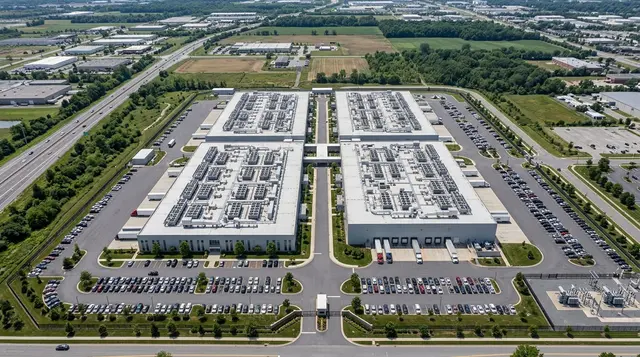
New York, NY – New York has become the first state in the nation to temporarily freeze the development of new large-scale artificial intelligence data centers, setting off a debate over how communities should balance economic growth with rising demands on energy, infrastructure, and the environment.
The one-year pause applies to new “hyperscale” data centers—massive facilities that support artificial intelligence, cloud computing, and other digital services and require at least 50 megawatts of electricity. State officials say the freeze will give regulators time to study the impact of these facilities before allowing further expansion.
The decision comes as demand for artificial intelligence technology is growing at a historic pace. Data centers are the backbone of AI systems, but they require enormous amounts of electricity to operate and cooling systems to prevent thousands of computer servers from overheating.
According to the U.S. Department of Energy, data centers currently account for about 4% of total U.S. electricity consumption, but that share could grow substantially by the end of the decade as artificial intelligence adoption accelerates. Federal researchers estimate that data center electricity use could reach as much as 12% of U.S. electricity demand by 2030 under higher-growth scenarios.
New York officials argue that communities need time to prepare for this rapid expansion. Large facilities can require new power infrastructure, including transmission upgrades and additional generation capacity. State leaders have also raised concerns about potential impacts on utility costs, water resources, and local communities.
Supporters of the moratorium say New York is taking a responsible approach by ensuring that AI growth does not outpace the state’s ability to manage its consequences.
Critics argue that the freeze could decrease New York’s competitiveness for technology investment, as data centers provide significant economic benefits, including jobs and tax revenue. Meanwhile, the technology industry warns that delays may shift investment elsewhere.
As other states monitor New York’s approach, this one-year period will test the balance between fostering innovation and addressing concerns regarding infrastructure, utility costs, and community impact, potentially setting a precedent for future technology development.
As artificial intelligence continues to reshape the economy, New York’s experiment may influence how the nation decides where and how the next generation of technology infrastructure is built.